Thursday, 3 June 2010

The English Defence League uncovered | UK news | guardian.co.uk

The English Defence League uncovered | UK news | guardian.co.uk

The English Defence League exemplify the camp mentality that Paul Gilroy speaks of. Identity is finished and closed. But more than that, in spite of repeated denials the EDL are dominated by a vile and violent Islamophobia as this article and video from the Guardian reveal....

Sikhism emphasises the sacramental nature of hospitality...unconditional welcome within the Langar....

Islam reminds us of the unity of humanity and the duty laid on all Muslims to work for social justice.....

Christians speak of a catholic community: one diverse worldwide community...Created in the image of the one God.... One race...the human race....

But what difference do such values make to the way people of faith act in thef ace of injustice? Check out the web link below and see what you think. Is this the kind of urban Britain you recognise?

Thursday, 27 May 2010

Remembering the Forgotten


Who remembers you? Who remembers me? Does anyone?
Made in the divine image we need to feel, to sense
that others, our sisters and brothers, remember us.

If we are forgotten we are unheard and unseen and in
a video age we perhaps cease to exist....

In a UK context where are the forgotten people, the
invisible ones? Those who live in the shadows as
asylum seekers, those who live as statistics on
welfare or on neglected outer city estates, those
who make their bed in shop doorways...

Within the Christian tradition we follow a man who
was a refugee, fleeing with his mum and dad to Africa.
We follow a man who had no place to lay his head, a
man executed outside the city wall next to Jerusalem's
rubbish dump...And yet the Church that takes Jesus' name
has become a multinational corporation...What might it
mean if we again became a rootless Kingdom movement?
Might we remember the forgotten ones more clearly,
those like the peoples of the Horn of Africa whom
Ethar Relief support....

Check out their web site and then ask the question
Jesus askes in Matthew 25....When I was hungry/homeless/
naked/a stranger did you feed/welcome/clothe me?


http://www.etharrelief.org/content/about-us

Friday, 21 May 2010

The New Slavery....


http://www.openhorizon.org.uk

In a world where markets have been prised open
by the irresistible power of globalised capitalism
walls keep people in, but mostly out.

And yet people are shifted like cattle, like the
slaves of the Atlantic Triangle...Webs of violence
enmesh us, compromise us, involve us all...Women made
in the sparkling divine image, promised a new life
then sold into the slavery of 'house-servant' for the
new global elite or the abusive spiral of forced
prostitution...Where is God? Where are Her people?


What might the new politics' in the UK have to say
about the trade in human beings, and more to the point
what might the 'new' politicians' do? What should we do?

This web site, sponsored by the Methodist Church in
the UK offers ome ideas....One race, the human race
Check out the site and get active....

Thursday, 13 May 2010

What does in mean to be 'English' in C21?

Here is one take from the singer-songwriter and activist Billy Bragg....

Saturday, 8 May 2010

Friday, 7 May 2010

ORGANISING FOR JUSTICE: CITIZENS UK


The campaign that led to the election of Barak Obama
as the 44th President of the USA just over a year ago
is rooted in a powerful vehicle for social justice -
community organising.

For the last 20 years community organising has
been slowly growing in the UK, especially in
London and Birmingham. Linking faith communities,
schools, trades unions and community groups broad
based community organisations in the UK work on
grassroots political lissues. Last week in the closing
days of the 2010 General Election campaign the
Citizens UK General Election Assembly at Methodist
Central Hall in Westminster drew over 2,500 people:
all part of Citizens UK. At the assembly the leaders
of the three main political parties, Gordon Brown,
Nick Clegg and David Cameron were confronted with
a new way of doing politics....from the bottom-up.

In this Blog we get a sense of where community
Organising is coming from.Might it be that in C21
it offers a new model of liberation theology for a
multifaith society? Check it out and see what you think....

http://citizensukblog.org

Tuesday, 15 December 2009

HYBRID URBAN FAITH

In Context

The concept of hybridity refers to the increasingly significant emergence of ‘dialogical identities’ in urban Britain. The 2001 National Census pointed to a growing community of people of dual heritage. In Birmingham 30,000 people defined themselves as dual heritage [3%] and across England and Wales 677,000 people defined themselves in this manner [1.2%]. It is important to set this trend alongside the persistence of raciological debate, the increasing electoral success of the far right British National Party in the early years of the 21st century, critiques of multiculturalism, debates about belonging and the nature of Britishness.

Social hybridity represents a critique of essentialist raciology and fixed patterns of identity. Thus urban youth identities can draw hip-hop music together with Anglicised-Jamaican patois that is infused with Bengali/Punjabi/Urdu vocabulary and ‘New York’ street fashion to give rise to a new hybrid/dialogical identity. Urban popular culture provides a clear illustration of cultural and technological hybridity. Fusion is not new within urban music (see for example Jazz fusion or funk in the 1970s and 1980s). However the fusion of different cultural forms which bring different expressions of diasporan British life into dialogue is more recent. Two examples of such musical hybridity are the Asian Dub Foundation who draw together rap, bhangra, classical Indian music, dub and ragga and the solo artist Nitin Sawhney traditional Indian music, flamenco, Latin rhythms, drum ‘n bass, tabla and techno. Such hybrid urban music exemplifies the challenge which hybridity represents to compartmentalisation.

In Theory

The concept of social hybridity has stimulated increasing debate within social theory and cultural studies. The term is not without problems. It invites parallels to be drawn with its use in botany where different species of plant are fused to create a new hybrid or with the pseudo-scientific raciological taxonomies of the nineteenth century. It suggests that the only future for plural Britain is one in which normative difference leads to fusion and not an evolving dialogue of equals. In spite of this the concept has challenged fixed and binary understandings of identity. The term has been closely associated with Bhabha who speaks of a ‘third space’ within plural societies. This dialogical space critiques notions of cultural isolation or ‘purity’ through its articulation of an in-between location which is characterised by fluidity, uncertainty, dialogue, instability and difference. A hybrid society is one, according to Hall, which is characterised by intimacy and not isolation, fusion and not so called purity. Gilroy observes, ‘From the viewpoint of ethnic absolutism this would be a litany of impurity.’ Baker suggests that the experience and language of hybridity signal an inexorable move away from the binary definitions of modernity towards an increasingly fluid and intermingled urban society. The hybrid third space within urban Britain which is forged in the gaps between fixed communities can be seen as a locus for submerged narratives to emerge. As Baker points out, ‘Within our postmodern culture we now have stories, theories, cultures and urban spaces that are fusions of gender, sexuality and different degrees of mobility as well as race, culture and ethnic identity.’ In his challenge to raciology Gilroy asserts the ethical force of hybridity, suggesting that the ‘…theorisation of creolisation and hybridity…’ can provide the template for liberative identities in the twenty-first century which move beyond essentialism and raciology.


In Theology

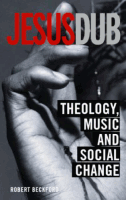
Whilst proactive reflection on hybridity has only emerged in recent years within urban theology the related question of syncretism has long been a source of debate as Schreiter notes in relation to the dialogue between indigenous cultures and missionary based Christian preaching on a global scale. During the last decade two British urban theologians have focused reflection the contemporary experience of hybridity in post-colonial Britain. Beckford has sought to forge a dialogue between the black-led church and Rastafarianism, arguing that the concept of ‘dread’ within Rastafari can be placed in a dialogue with understandings of Jesus as liberator to fashion an emancipatory hybrid Christology. Unlike Beckford who has sought to use hybridity and cultural interchange to forge a specifically black Christology, Baker has begun to reflect on the character of hybridity itself as a new and potentially liberative theme within urban life and faith. He speaks of the emergence of a ‘third space’ theology which arises from the dialogical space in contemporary society which is created as a result of the subversion of fixed binary understandings of identity. Hybridity becomes a creative theological category which Baker argues emphasises the creative potential of ‘burred encounter’, inclusive hospitality, dialogue, catholicity, holistic understandings of creation and an ‘...open-ended and fluid Christology.’


Some Key Texts

Chris Baker, The Hybrid Church in the City: Third Space Thinking. (Aldershot: Ashgate, 2007)

Robert Beckford, Dread and Pentecostal: A Political Theology for the Black Church in Britain.
(London: S.P.C.K, 2000)

Homi Bhabha, The Location of Culture. (London: Routledge, 1994).

Paul Gilroy, The Black Atlantic: Modernity and Double Consciousness. (London: Verso, 1993

Paul Gilroy Against Race. (Cambridge Massachusetts, The Belknapp Press, Harvard University, 2000)

Paul Gilroy, After Empire: Melancholia or Convivial Culture? Abingdon: Routledge, 2004

Stuart Hall, ‘Cultural Identity and Diaspora’ in Jana Evans Braziel and Anita Mannur. ed. Theorising
Diaspora. (Oxford: Blackwell Publishing, 2003)

Robert Schreiter, Constructing Local Theologies. (Maryknoll NY: Orbis Books, 1985)

Leonie Sandercock, Cosmopolis II: Mongrel Cities (London: Continuum Press, 2003)

Wednesday, 22 July 2009

HIP-HOP GOSPEL?

Taken from the Daily Telegraph......


'First he brought us Jesus Walks; then college dropout Kanye West courted controversy by appearing on the cover of Rolling Stone magazine as Jesus Christ himself. Now he is apparently claiming that he should be a character in The Bible. Is Kanye making a valid point by portraying himself as a black Jesus?


Covered in blood, Kanye West is shown wearing a crown of thorns on his head in the deliberately provocative picture by photographer David LaChapelle. Amazingly, Kanye claims that his life is similar to Christ's, saying that he has had to fight for recognition and suffer for success. "If I was more complacent and started to let things slide, my life would be easier, but you all wouldn't be as entertained. My misery is your pleasure", he is quoted as saying.The Boston Globe sums up the views of many when it says: "The idea that West, a 27-year-old rapper who's a millionaire many times over, is somehow persecuted is preposterous. Rolling Stone is trying to sell a few more mags by posing Kanye West as Christ on the cover... Here's hoping it doesn't work."The Baltimore Sun says: "Perhaps he meant it as a symbol of personal suffering. Maybe he wanted to present young hip-hop heads with an updated image of the Son of God. Whatever his motives, Kanye West again has accomplished what he set out to do: Get people to talk."

Kanye is not the first rapper to liken himself to Jesus.Jay-Z famously calls himself Jay-Hova, the savior of rap. In "Pain In Da Ass" he says: " Hello, it's Hova; that's right young'un the wait is over;The new millennium is upon us, the album is here."There have been others: Mase appears on an album cover as Jesus, and P Diddy appeared on the cross in the Nas "Hate Me Now" video. Even Michael Jackson has a picture of The Last Supper over his bed with Jackson sitting in Jesus' place.

There is an increasing trend of portraying Jesus as a black man. How accurate is the traditional portrayal of Jesus? What color was the original Christ? It can almost certainly be said that Jesus would not have been white. His hair was also probably cut short, unlike the image shown in most western portraits. Jesus did have some African links — after all, as an infant he fled with his parents to Egypt where, presumably, his appearance did not make him stand out. The recent movie "Son of Man" casts Jesus as a black, street-bred South African, challenging Hollywood's depiction of a western-looking Jesus. In the film Christ wears jeans and a T-shirt, is born in a shanty-town shed, and his mother Mary is a feisty virgin who argues with angels. Another movie, "Color of the Cross," features a black actor portraying Christ. "It's more likely that Jesus was black than it was that Jesus was European" said one of the movie's producers.

Sneaker maker Pony used an image of a black Jesus in an advertising campaign to relaunch the brand as an 'athletic shoe with attitude'. The ad's art directors Fred and Farid defended the image by claiming "The black Jesus is the strongest statement we found for this hip-hop brand. It's saying: 'Why should God be always represented by a white guy?' In some ways, it's a very politically correct ad. More shocking than this picture is the fact that most of the churches around the world still have only a white man as the representation of God. It's also a reflection of the open-minded philosophy of the Pony brand. It's even fairer considering the fact that most of the sports athletes and hip-hop artists on the walls of teenagers' bedrooms are black."The Pony campaign, shot by 50 Cent's photographer Sacha Waldman, was chosen as one of the best print campaigns of the year, even though the ad was not run in the US.'

WHAT DO YOU THINK???


The Daily Telegraph (2009)


POWERLINES....


Powerlines criss-cross the city,

Currents of energy coarse through it's veins.

'High' culture, 'pop' culture, faith, 'race', muscle and money

Weave their patterns and vie for control.

A spaghetti junction of influences moulding metropolis,

Liquid life pours the world into an urban mould.


Power flows and disrupts,

Draws in and pushes away.

Blood flows, life force

Blocekd, rationed, hoarded, controlled.


Powerlines criss-cross the city,

Light up the shadows for those with a key.

Friday, 17 July 2009

PRAY FOR THE CITY


Hold before God those in our city who will sleep rough tonight.....


Brother Jesus come close to us today.


Hold before God those in our city who will be hungry tonight.....


Brother Jesus come close to us today.


Hold before God those in our city who will be pushed aside today....


Brother Jesus come close to us today.


Hold before God your sisters and brothers of other faiths....


Brother Jesus come close to us today.


Hold before God those who will arrive in our city today.....


Brother Jesus come close to today.


WHAT THE PAPERS SAY...


A central thrust within the Biblical narrative is the call to welcome or love the stranger. The city in 2009 is a fluid and changing place which relies on flows of migration. In the face of the current recession the targetting of the 'stranger' may well increase as if often does during periods of unemployment. This is the moment to keep an eye on the papers....How do they report stories about unemployment, crime, housing, education, health.....Are they scapegoating asylum seekers? What can we do?


  • Does your blood boil when you see papers blaming all the ills of the world on asylum seekers?

  • Do you worry about relationships in your community when soem newspaper articles seem to stir up 'racial' or religious hatred?

  • Do you want to find a way to respond and to answer the Biblical call to 'love the stranger'?

Did you answer 'Yes' to any of these questions? If you did then read on....The guidelines below were developed as part of the YEAST IN THE CITY Community Ministry project...Use them to respond to stories in the media that demonise asylum seekers or stir up racism....


WATCH....


  1. Home in on just 1 newspaper/broadcaster

  2. Focus on headlines, pictures and opinion pieces

  3. Keep a kind of scrap book of articles featuring asylums seekers

THINGS TO LOOK FGOR...


  1. The accuracy of facts

  2. Whether mention of the phrase 'asylum seeker' is relevant to the story

  3. Evidence of incitement to racial religious hatred [a crime]

  4. Confusion of themes [i.e asylum with legal immigation]

  5. The placement of stories and the ways in which pictures are used]

  6. Any pattern of clear bias within a particular newspaper/broadcaster

ACTION....


  1. Be constructive

  2. Stick to the use of language/pictures in the story

  3. Be specific

  4. When contacting a newspaper ask for the news editor or features editor

  5. When phoning to complain have a clear idea of what you want to say

  6. Write a letter to be published in the letters section of the newspaper

  7. Where facts are incorrect ask for a retraction/correction/apology

  8. Encourage newpsapers to print 'good news' stories...be ready to supply these.

  9. Write/email your M.P/Local councillor.

These guidelines might help to focus anger, faith and action. Have a go and post any reponses you get on the Blog.....

Wednesday, 24 June 2009

William Temple Foundation


URBAN MUSIC AS THEOLOGY

A CHANGE IS GONNA COME....

Edward Said suggests that we shoudl see intellectuals as people who 'bring suffering into the light'....Music on the streets of contested cities doesn't just dull the pain or throb from car windows...It paints a picture of city living that subverts simple pictures if we have ears to listen.

Check out Ms Dynamite, Dizzee Rascal, The Enemy, Skinnyman....Go back to The Clash, The Jam, The Specials....Is this town comin' like a ghostown?

Fresh expressions is not the same as dressing up suburban religion in cool urban wear. That's not fresh (or authentic). Freshness is found where people are asking new questions or telling new stories.....The soundscape of urban music maybe offers a new text in a 'post-Bible' century???


Thursday, 28 May 2009

Seeds of a New Hermeneutical Principle: Liberative Difference

The day before yesterday I bumped into our postman. He looked really gloomy. 'I'm really sorry' he said 'But the BNP have got the royal mail to deliver their election leaflets. It makes me feel dirty....as if some of the people I deliver letters to just don't matter...'


Our postman was right...The splintering of marginalised urban communities, the demonising of ’the stranger’, the scapegoating of the British-Muslim community since 9/11 and the political abandonment of progressive multiculturalism sustain a model of citizenship that is premised on this ethic of oppressive difference.

We get divided into camps....religious as well as cultural....and when we are divided the only people that win are the BNP. But life's not like that is it? Those of us who live in big cities know just how everyday diversity is. We live in what's been called the 3rd space...different identities fusing, changing, re-creating something new in the city.

How can people of faith [often just as guilty of camp mentaility and race based thinking as anyone else] move beyond thinking it's OK in 2009 for a group of white dancers to come to a church social 'blacked up'? [It didn't happen in case you'er wondering but only because the Minister said 'No way.'] We need to move beyond saying 'Isn't diversity wonderful, just like a beuatiful rainbow.' Diffference isn't always wonderful...Let's be honest there are ways of thinking and acting that we say are OK but we recoil from because they are oppressive. So let's get real. Maybe what I want to call 'liberative difference' can help us out and help to put the BNP in their place....What do I mean?

Just this....As we engage in the life of the city and the life of our faith communities

Does the person we engage with accept or resist the dynamism of plural urban life? Do they see their own take on life as something that is open to change/challenge? Do they accept that people with other ideas/cultural stories are partners in struggle [or are they seen as competitors?] Do they see difference as a sign of life or a portent of doom? Are they ready to share with others in a coalition for social justice?

I really do believe that as I read my own scriptures and see the way in which Jesus depicts difference as gift that it can become a motor for real progressive change in the city. Not change that's a mask for conversion, but change that respects those with whom we share the city as partners, or even sisters and brothers....That's what I see in Jesus and that's why it makes my blood boil when the BNP parade around as if they were Christians....Let's be clear you cannot be a racist and a Christian....No ifs, no buts...That's why I get angry when my own Methodist Church is too slow and too hesitant to be up front with every single Methodist in Britain: 'Voting for the BNP is not compatible with being a member of the Methodist church...Choose one or the other but if you choose the BNP then you will no longer ne a part of the Methodist church.' Let's stop mucking around!

Liberative difference is built upon the divine bias to the stranger and the excluded

Liberative difference is a hermeneutics of the excluded and the demonised.

Liberative difference expresses the fluid, intra-contextual character of urban society.

Liberative difference enables a new conversation about ‘place’ as significant and multiple.

Liberative difference moves urban faith and politics beyond all forms of raciology

Liberative difference resources shared liberative praxis.

Liberative difference dubs prevailing antagonism towards difference, which becomes the driving force behind inclusive, networked liberative praxis.

Liberative difference enables a new critical multiculturalism to emerge which recognises the importance of the development of a progressive critical white identity.

Liberative difference unmasks and resists theological camp mentality.


I want to be able to look my postman in the eye and say, 'I said No to the BNP. So can you.' Don't we all want the same?

Wednesday, 20 May 2009

There's Nothing British About the BNP


THERE'S NOTHING BRITISH ABOUT THE BNP.....


CHECK OUT THE WEB SITE AND SIGN THE PETITION

NO PLACE FOR HATE....
ONE LIFE, ONE LOVE, ONE BLOOD...


Monday, 18 May 2009

Facebook | Chris Shannahan


HOPE NOT HATE...


DEFEAT THE BNP.....Vote Hope on June 4...

Wednesday, 13 May 2009

Salma Yaqoob calls for a big turnout on Birmingham jobs march « Birmingham Respect


Salma Yaqoob calls for a big turnout on Birmingham jobs march


Councillor Salma Yaqoob is backing the national ‘March for Jobs’ taking place in Birmingham this Saturday, 16 May. She is calling for a big turnout to send a strong message to the government that protecting jobs must come first. Councillor Yaqoob said:“There is hardly a family in the country which has not been affected by the recession. With unemployment now over 2.2 million, every day brings new job losses, and people across Birmingham are worried for their future. Huge sums of money have been used to bail out the banks. We need to see the same commitment to keeping people in jobs, and investing in vital industries to see them through this crisis.


“The government has its priorities wrong; with billions earmarked for wasteful and unnecessary projects like ID cards and the renewal of the Trident nuclear weapons system. It is time to send a strong message to the government that protecting jobs must be its first priority. That is the right way to protect individuals and families, but also to boost the economy at a time of economic crisis.”


The demonstration, organised by the Unite union, will assemble at 11am on Saturday 16 May at Highfield Road, Edgbaston (corner of Hagley Road), and march to Centenary Square for a rally.

Saturday, 9 May 2009

BIRMINGHAM URBAN THEOLOGY FORUM


University of Birmingham
Urban Theology Forum


invites you to share in an afternoon seminar entitled:

SPACES OF RELIGION AND ECONOMY IN
A TIME OF UNCERTAINTY

To be given by

Stephen Willey [Chaplain @ NEC Group]
Gregory Roberts [Postgraduate student, University of Birmingham]
Markus Vinzent [University of Birmingham]

In the John Kydd Room at Elmfield House, University of Birmingham (Selly Oak Campus), Bristol Road, Selly Oak [just opposite Weoley Park Road]


Wednesday 24th June from 2-4.30pm

Please let Martin Stringer (m.d.stringer@bham.ac.uk) or Chris Shannahan (cjshannahan@googlemail.com ) know if you are able to attend.

Sunday, 26 April 2009

www.indymedia.org

http://www.indymedia.org

Tired of being told only one side of the story.

Make up your own mind.....